
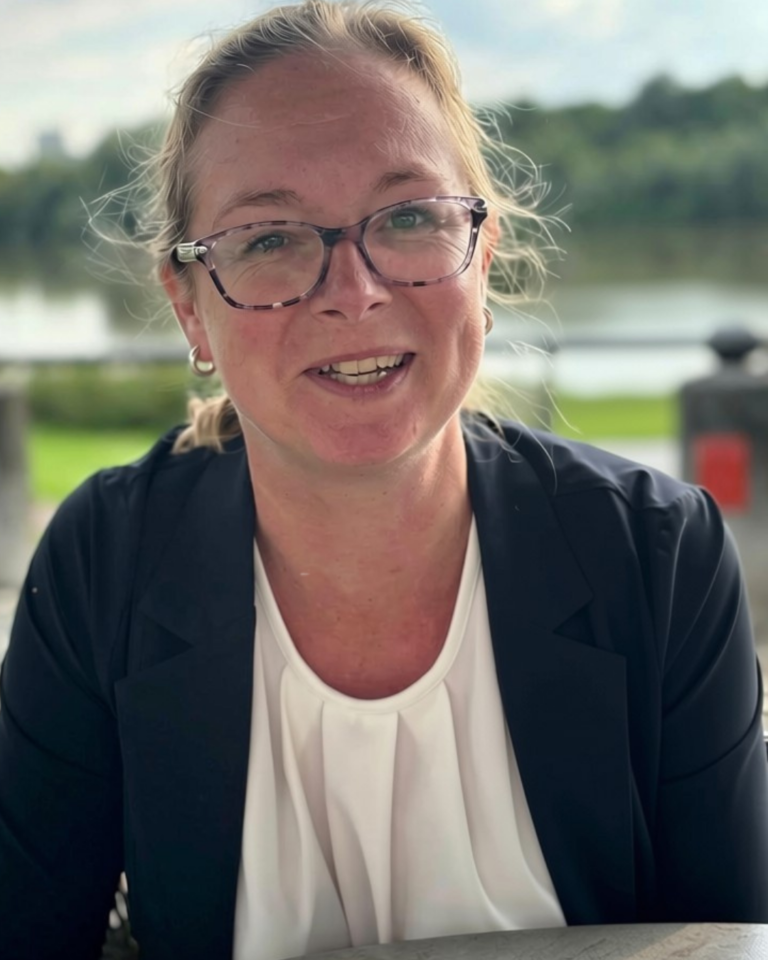
Hello! I’m Flore Joskin, and I work as the Communications Manager for YOUTHreach. Alongside that, I’m also involved in communications for a research project called Youth-GEMs (www.youth-gems.eu) and several other research projects within the Mental Health and Neuroscience Research Institute (MHENs) at Maastricht University. At the heart of everything I do is one simple question: how can we make sure that scientific research reaches the people it’s meant to benefit?
Research into adolescent mental health only has real impact when people know about it, understand it and can use it. Not just other researchers, but also young people, parents, teachers, mental health professionals and policymakers.
No two days in my job are ever the same. One day I’m sitting around the table with colleagues developing a communication and dissemination strategy, discussing which stories we want to tell, who we want to reach and why those stories matter. The next day I’m translating complex scientific findings into something that’s engaging and easy to understand, whether that’s a news article, an infographic, a video or a social media post. Sometimes I’m working on a flyer or a website, other times I’m helping to develop a knowledge platform or attending a conference to raise awareness of our project. And yes… there are also days when I spend hours editing a video, only to realise that most young people could probably do it twice as fast as I can.
One of the things I love most about my work is that I don’t just communicate about young people; I’d rather work and learn with them. Within YOUTHreach, I really enyoy working with the Youth Advisory Group and the board of AEGEE-Europe. Their ideas, lived experiences and, at times, their challenging questions keep me on my toes. After all, they know better than anyone what matters to young people and how to genuinely connect with them.
The answer is both professional and personal. Through my own experiences, as well as during my time working at @ease in the Netherlands (one of the interventions being studied within YOUTHreach), I’ve seen the difference it can make when mental health struggles are openly talked about. There’s something incredibly reassuring about realising you’re not the only one. About having someone listen without judgement. About not having to carry everything on your own.
I also see how much pressure young people face today. Achieving good grades. Choosing the right career path. Finding your place within a group of friends or a sports team. Working out who you are. And, at the same time, scrolling through social media where everyone else seems happier, more successful and as though they have everything figured out. That’s a lot for anyone to deal with. Sometimes it can feel as though you’re expected to have it all together, while you’re still discovering who you are.
That’s exactly why I believe mental health support should be easy to access. Young people shouldn’t have to wait months before they can get help. It should be completely normal to talk about mental health. And support shouldn’t only be about solving problems; it should also help young people build the confidence and skills to cope with life’s uncertainties and challenges.
It’s this belief that makes me enjoy working on YOUTHreach every single day. Not because communication is the goal in itself, but because good communication helps knowledge reach people, starts meaningful conversations and ultimately contributes to better mental health support for young people. And if I can play even a small part in making that happen, then I know my work is worthwhile.
Find the latest YOUTHreach updates in your inbox!