
I have always had a deep passion for technology, so, when I first heard about biomedical engineering in high school, I was immediately captivated by the idea of technology genuinely in service of people. That vision shaped my academic path from the very beginning.
During my university years, I discovered the computational side of biomedical engineering: the analysis of physiological signals generated by the human body, and the development of tools, including AI-powered ones, placed in the hands of clinicians and patients alike. I also came to appreciate the profound synergy that must exist between engineering and clinical expertise, and how biomedical engineers can act as a bridge, building the right technologies to facilitate communication and interaction between these two worlds and the patients.
After graduating, I immediately joined Ab.Acus, a research-driven technology company that translates advanced ICT and engineering methodologies into real-world healthcare solutions (spanning IoT, AI/ML, mobile technologies, and cloud platforms). There, I took on the dual role of researcher and software developer of mobile and monitoring systems for clinical and research applications, a combination that allows me to pursue, in very concrete terms, the purpose that drove me to choose this field of study.
Through this work, I discovered how a “simple” mobile application can actually be a remarkably powerful and accessible tool for people. In today’s society, the smartphone is arguably the most universally owned object, transcending age groups and social conditions, making it an ideal medium for a wide range of studies and interventions. In this light, the phone is no longer a possible source of dependency or social isolation, but a genuine instrument for well-being and self-improvement.
This work also opened my eyes to the world of European research projects, and I have been inspired by how the European Union increasingly invests in critical areas such as mental health. In european projects like HappyMums, Youth-GEMs, and STAGE, I had the opportunity to contribute directly to this mission through mobile application development. HappyMums is an EU-funded project focused on women’s mental health during the perinatal period where I contributed to the development of the monitoring app(1) used to track maternal well-being during pregnancy and to support early identification of women at risk of perinatal depression. With Youth-GEMs, a large-scale initiative aimed at significantly reducing mental suffering among European youth, I worked on the mobile component designed to empower young people and clinicians in detecting and monitoring mental health issues early. STAGE, in turn, takes a life-course perspective on healthy ageing and multimorbidity, and again, my contribution centered on the mobile tools integrated into the study to collect longitudinal data from participants across diverse living environments.
Working on the YOUTHreach project represents a further and exciting step in this journey. This time, beyond my role as one of the developers of the mobile application used as a cross-intervention evaluation tool in this study, I am also serving as project manager on Ab.Acus’s side, coordinating the development workflow and managing communication with the other consortium partners. It is a responsibility I embrace with enthusiasm, as it pushes me to grow both technically and as a professional.
More broadly, working in these European research environments, and in YOUTHreach in particular, has given me the privilege of connecting with specialists from across Europe: people who have different academic background and bring different perspectives, clinical traditions, and research cultures but share a single common goal. This cross-disciplinary and cross-cultural exchange is, without a doubt, one of the greatest enrichments this field can offer.
I truly cannot wait to get deeper into this project, and I am committed to bringing my very best contribution to YOUTHreach.
(1) Priestley K, Laijawala R, Hazelgrove K, et a lHappyMums mobile application study protocol: use of a smartphone application to gather data predictive of antenatal depression BMJ Open 2026;16:e106978. doi: 10.1136/bmjopen-2025-106978
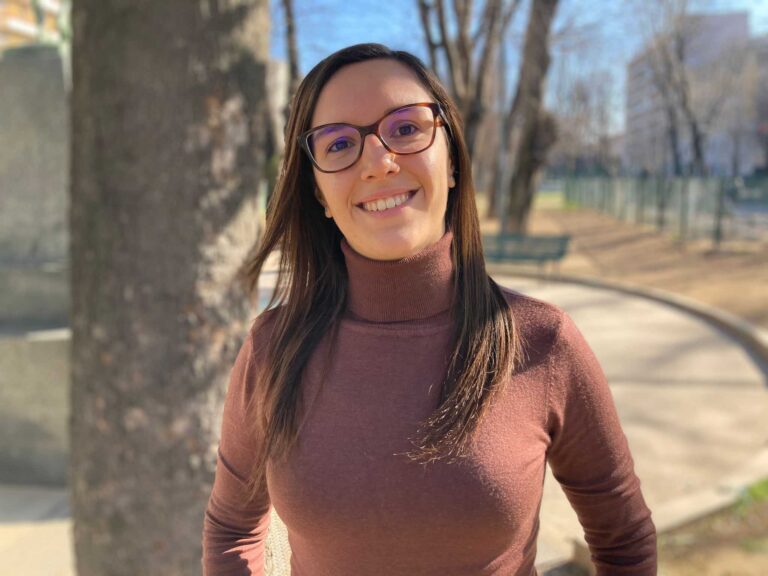
is a biomedical engineer graduated from Politecnico di Milano (Italy) and specialized in the field of information bioengineering.
Find the latest YOUTHreach updates in your inbox!