
One of the first young people I worked with told me: “On paper my life is fine, but in my head it’s chaos.” They had friends, did well at school, and seemed “okay” to everyone around them. But inside, they felt overwhelmed, insecure, and constantly worried about the future. What struck me most was not the intensity of their feelings, but how alone they felt. Yet they are far from alone in their feelings, as WHO estimates show that one in seven adolescents aged 10-19 experiences mental health conditions (WHO, 2024).
My name is Anna Kessler. I’m a psychotherapist in training and PhD student in the YOUTHreach project. I move between two worlds: the therapy room, where I meet individual young people, and research meetings, where we talk about systems, data, and interventions. In both spaces I see the same reality: youth mental health is under pressure, and many young people feel left alone with their worries (McGorry et al., 2022).
Today’s generation is growing up with a mix of challenges: school and university stress, insecure work, family expectations, social media comparison, and climate anxiety (Kim, 2021; Wasmus et al., 2025). These pressures create exactly the kind of internal chaos that young person described to me, creating a gap between how life looks from the outside and how it feels. For me, the key question is: what would it look like if mental health support really matched young people’s lives today? Not only crisis care when everything collapses, but earlier, more flexible support that takes their daily reality seriously and works to prevent crises before they develop
Within YOUTHreach, I work on SELFIE, a training for young people aged 14–25 who have experienced adversity and struggle with low self-esteem. Every two weeks, they meet with a mental health professional to practise concrete skills: noticing strengths, challenging harsh self-criticism, and finding small, realistic steps when things feel overwhelming. For instance, they might practice catching everyday successes as “Today I spoke up in class or at work”. Between sessions, they try these skills out in their everyday environments within an app: in school, at work, with friends, and online.
The SELFIE intervention was developed in the Netherlands, where research has shown lasting positive effects on self-esteem and psychological distress even months after the training ended (Daemen et al., 2021; Reininghaus et al., 2024). Now, within YOUTHreach, the efficacy of the SELFIE intervention for improving mental health is investigated in several European countries. In my PhD, I look at what actually helps young people feel and function better: is it the relationship with a trusted professional, the practice in daily life via the app, the focus on self-esteem, or the combination?
When that young person told me their life looked fine on paper but felt like chaos inside, they were describing the gap we’re trying to bridge between appearance and reality, between struggling alone and having support that meets you where you are. That’s what SELFIE is about: creating space for young people to work with what’s really happening in their heads, not just what shows on the surface.
Follow @youthreach_eu on Instagram or LinkedIn, or subscribe to our newsletter at www.youth-reach.eu.

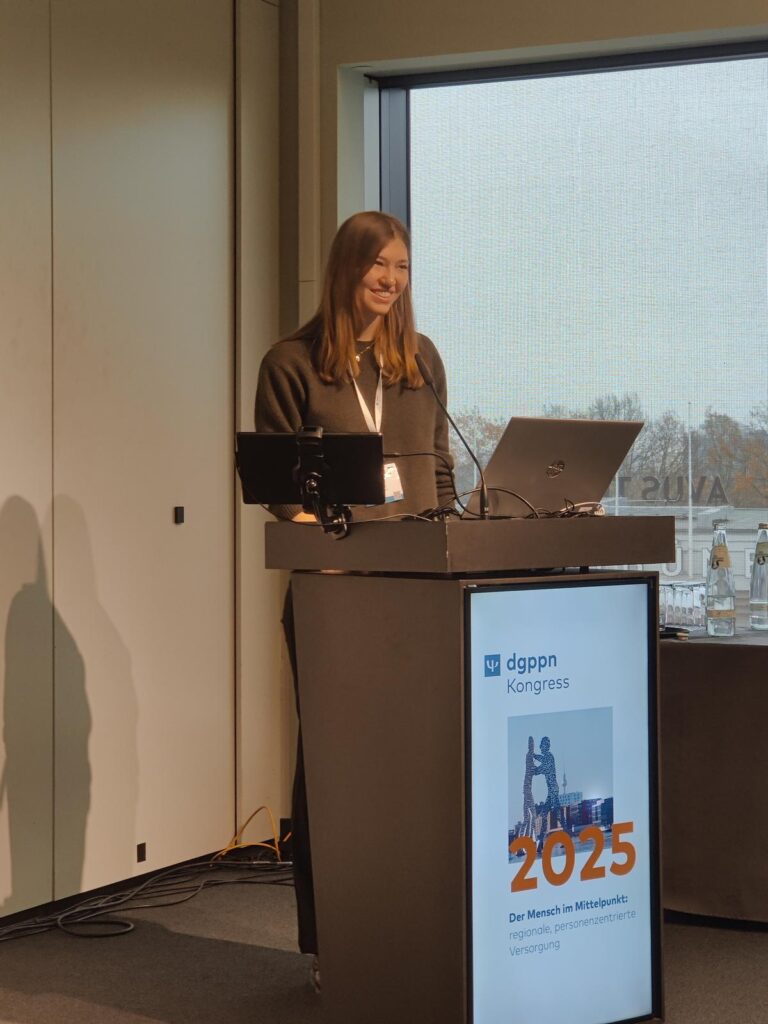
Anna presenting at the DGPPN Kongress.
Find the latest YOUTHreach updates in your inbox!