
Our Social Sciences & Humanities Advisory Group (SAG), made up of ethicists, social scientists, healthcare professionals, and youth representatives, helps ensure our work identifies and reflects on the values of young people across the different countries participating in YOUTHreach. In the initial meetings of the SAG, several themes and interesting discussion points were raised. Here’s a snapshot of ethical questions discussed in relation to our project:
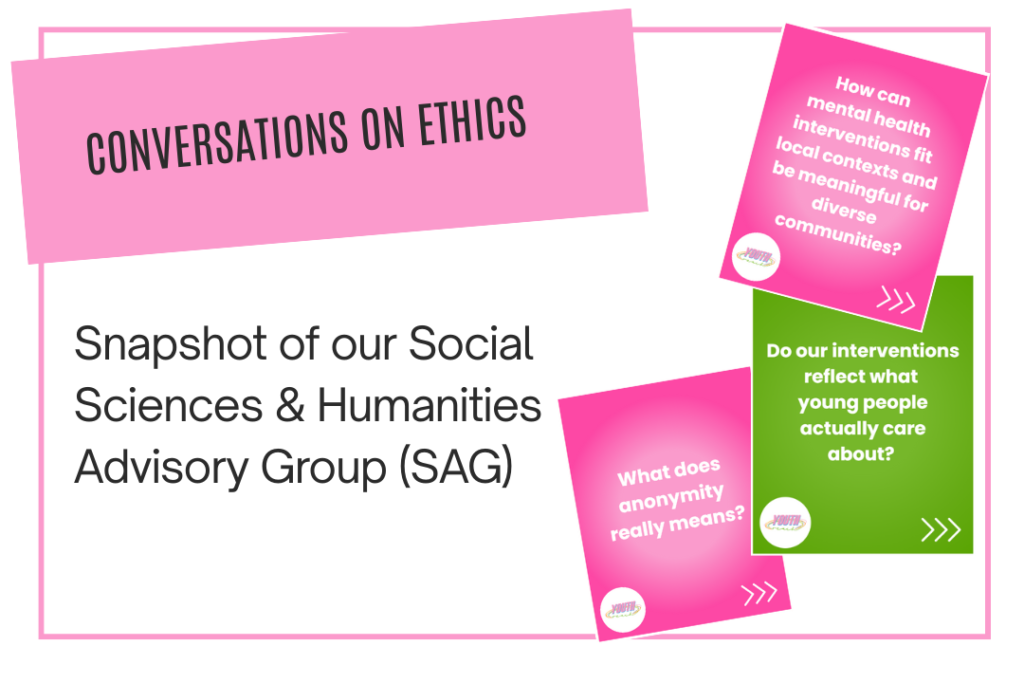
When it comes to their mental health, young people have differing priorities. For example, while some might prioritize coping skills, others could focus on emotional safety or on building a daily routine. Do our interventions reflect what young people actually care about?
Co-creation in YOUTHreach means that young people are not just participants in our study: they help shape it. They co-define what matters, what should be measured, how interventions should work, and what “good” support looks like. They bring lived experience and insights that others may not see. This raises an important question: How do young advisors want to be involved, and how do we ensure this involvement is meaningful?
Data is essential in scientific research, but data collection also takes a lot of time and energy from research participants. How can we gather useful information without compromising the care needs of young people?
Young people define and value privacy in various ways, and these definitions may differ from the way it is defined by researchers in the field. What counts as private? What does anonymity really mean? Which data should be collected and shared?
Across Europe, young people vary in language, values, expectations, and needs. How can mental health interventions fit local contexts and be meaningful for diverse communities?
These discussions help ensure that YOUTHreach remains youth-centred, culturally sensitive, and aligned to the care needs of different stakeholders. They deepen our understanding of young people’s lived experiences, strengthen the interventions we study, and guide us toward more equitable and ethical mental health support across Europe.
Find the latest YOUTHreach updates in your inbox!